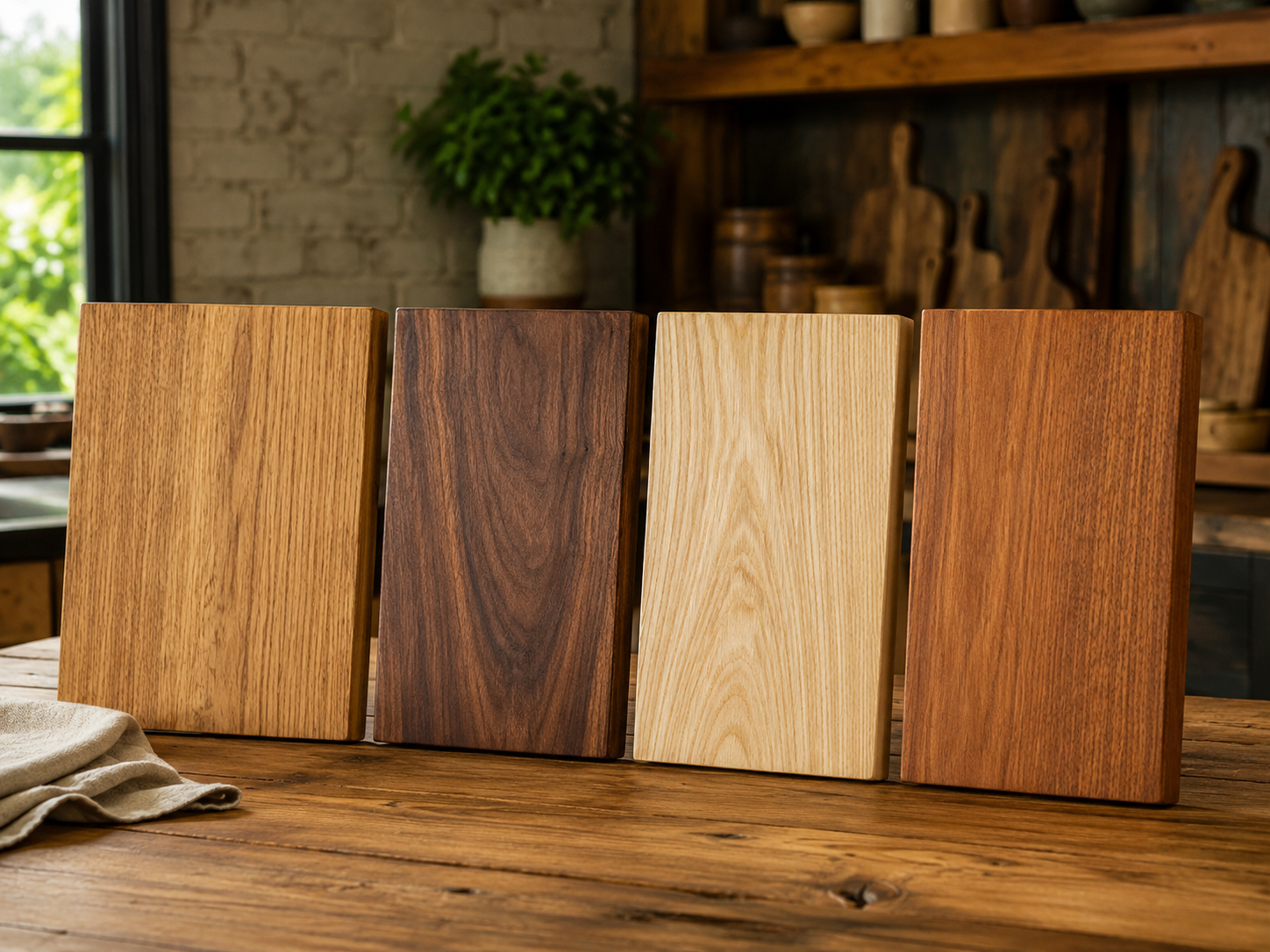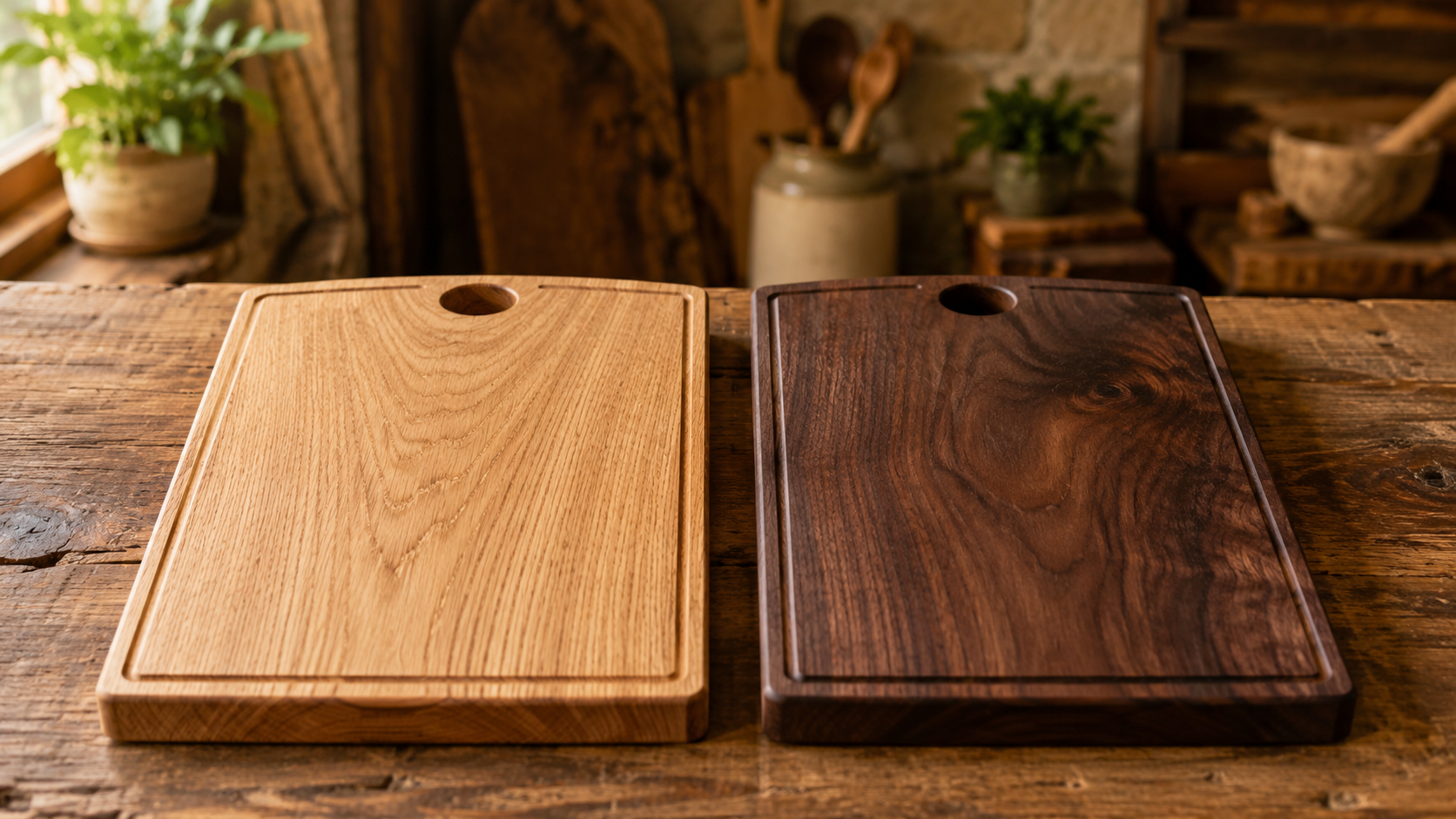
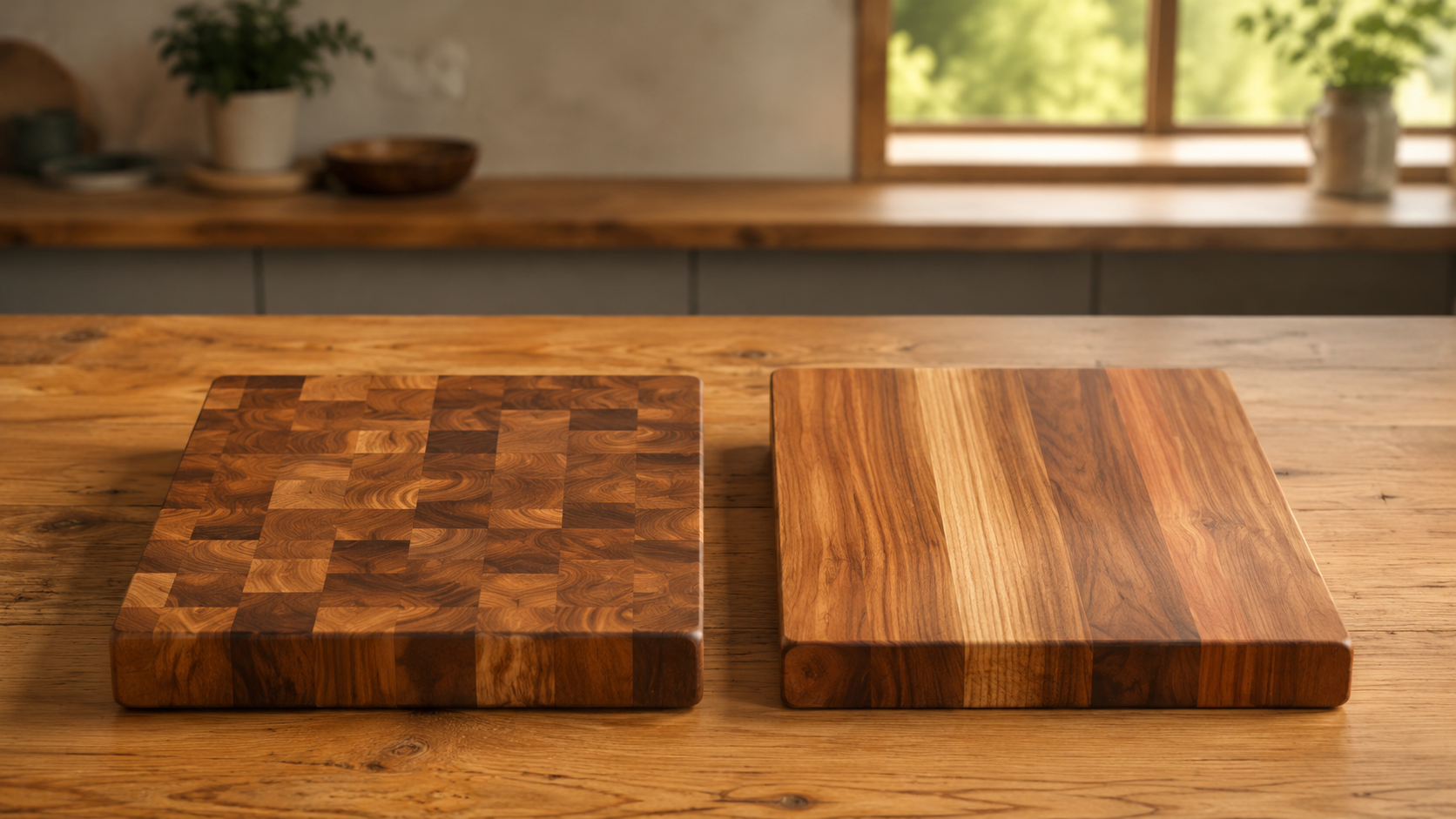
When choosing a wooden chopping board, one of the most common questions is: what is the difference between an end grain chopping board and a side grain chopping board?
Both can make beautiful, practical kitchen boards, but they are made in different ways and behave slightly differently in everyday use. The right choice depends on how you cook, how much maintenance you are happy to do, and whether you want a hard-working kitchen tool or a standout handmade piece.
What is an end grain chopping board?
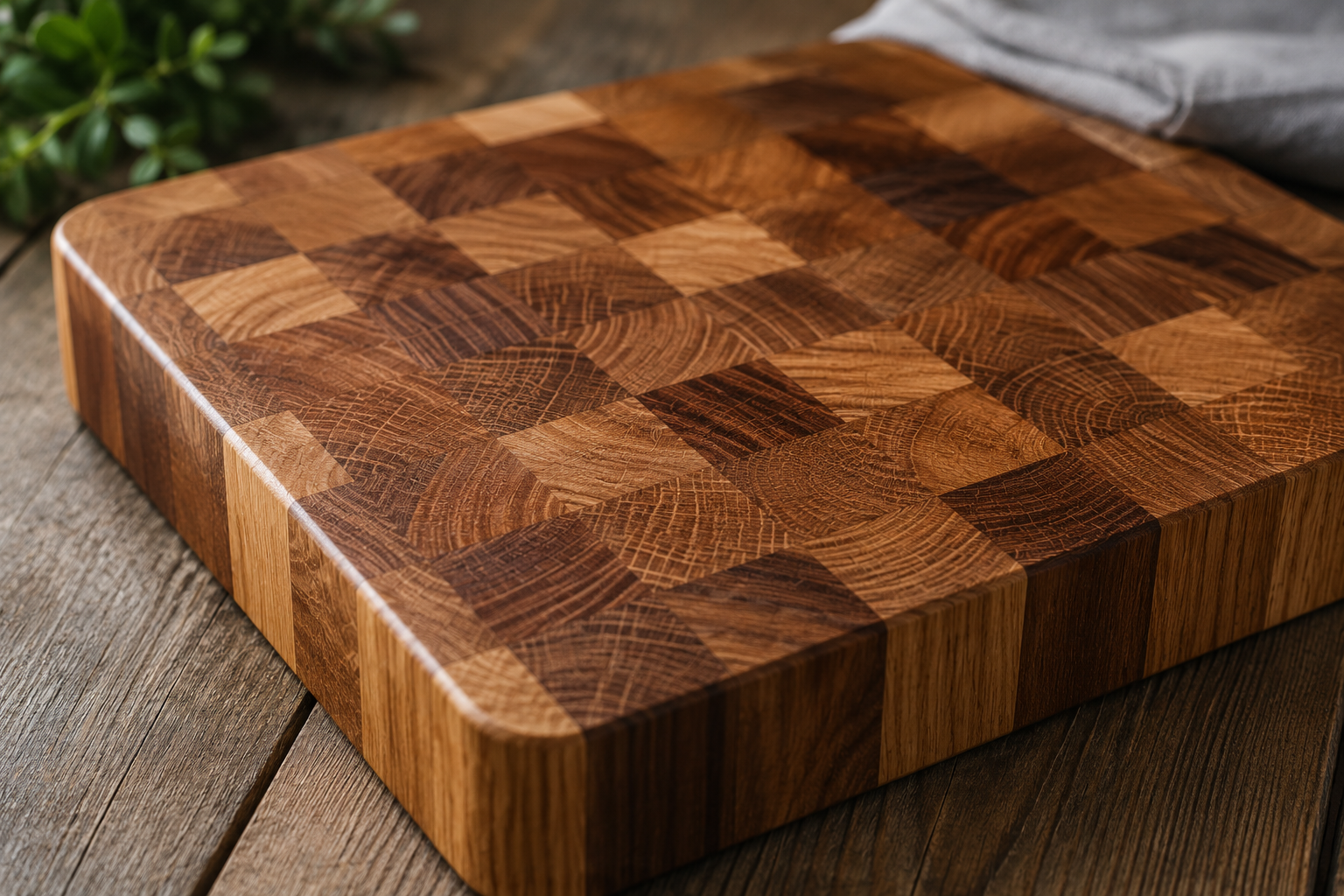
An end grain chopping board is made by arranging the wood so the cut ends of the timber face upwards. Instead of seeing long lines of grain running across the board, you see the ends of the wood fibres. This often creates a block-style or patterned appearance, especially when different pieces of timber are arranged carefully.
End grain boards are often seen as the more premium style of wooden chopping board. They usually take longer to make because the timber has to be cut, glued, flattened, sanded and finished with care. The result is a strong, heavy and attractive board that feels substantial on the worktop.
What is a side grain chopping board?
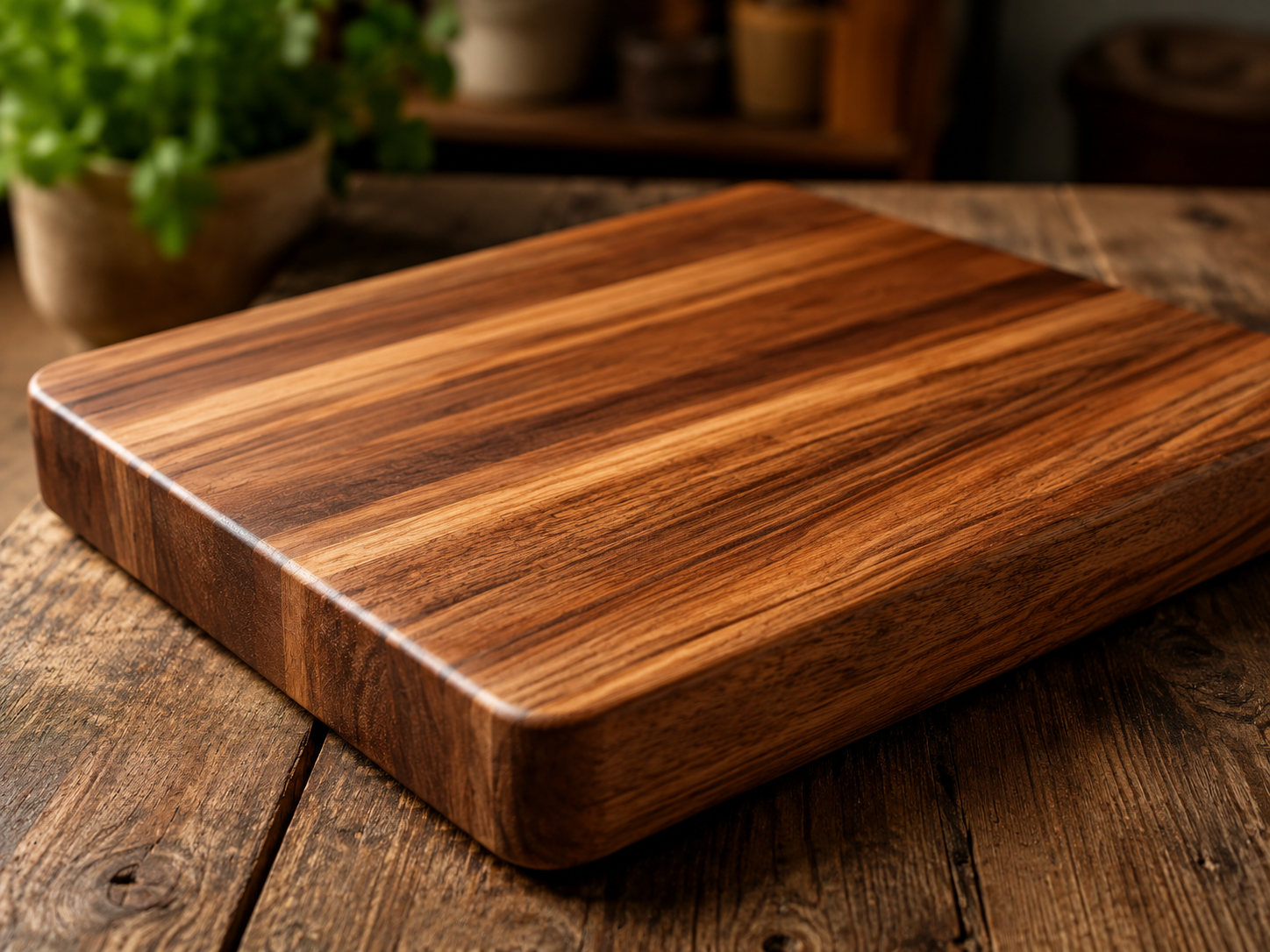
A side grain chopping board, sometimes called an edge grain or long grain board, is made with the side of the timber facing upwards. This means the grain usually runs in long lines along the board.
Side grain boards often have a cleaner, more striped look. They can still be handmade, attractive and long lasting, but they are generally simpler to produce than end grain boards. This usually makes them a more affordable option while still giving you the warmth and character of real wood.
Which type is better for knives?
End grain boards are generally considered kinder to knives. Because the wood fibres face upwards, the knife edge can pass between the fibres more easily. This is why end grain boards are often described as having a slightly forgiving surface.
Side grain boards are still perfectly suitable for everyday chopping, slicing and food preparation, but the knife cuts across the long grain rather than into the ends of the fibres. Over time, this can show more visible knife marks compared with a well-maintained end grain board.
That does not mean a side grain board is a poor choice. For many kitchens, a good side grain board is more than enough. It simply means that if you cook often and want a more premium chopping surface, end grain is usually the better option.
Which board lasts longer?
A well-made end grain board can last for many years if it is cared for properly. Its construction makes it strong and hard-wearing, especially when it is thick, well glued and finished with food-safe oil or wax.
Side grain boards can also last a long time, but they may show wear more quickly if used heavily. The most important factor is not only the grain style, but the quality of the timber, the thickness of the board, the glue-up, and how the board is maintained.
Any wooden chopping board can suffer if it is soaked, put in the dishwasher, left wet, or allowed to dry out for too long. Good care matters just as much as good construction.
Which one looks better?
This comes down to personal taste.
End grain boards often have a more decorative, patterned appearance. They can look bold, chunky and premium, especially when made from oak, walnut, maple or mixed hardwoods. Because each block of timber shows slightly different grain, every board has its own character.
Side grain boards usually have a calmer, more linear look. They can show off long flowing grain, natural colour changes and attractive stripes between different woods. They often suit kitchens where you want something warm and handmade without the heavier butcher-block appearance.
Which is easier to look after?
Both types need similar care. Wipe them clean with a damp cloth, dry them properly, and re-oil regularly with food-safe mineral oil or board wax.
End grain boards can absorb more oil because of the way the wood fibres are exposed. That is not a bad thing, but it does mean they benefit from regular maintenance. A dry end grain board will quickly look tired, while a well-oiled one can look rich, deep and beautiful.
Side grain boards may need slightly less oil in day-to-day use, but they should still be maintained. If any wooden board starts looking pale, dry or rough, it is usually ready for more oil or wax.
Which chopping board should you choose?
Choose an end grain chopping board if you want a premium board that feels heavy, looks special and is kinder to your knives. It is a great choice for keen home cooks, food lovers, gift buyers, and anyone who wants a board that can become a feature piece in the kitchen.
Choose a side grain chopping board if you want a practical, attractive board for everyday use. It is a good option if you prefer a lighter-looking board, want something slightly simpler, or are buying your first handmade wooden chopping board.
For most people, the best choice comes down to how the board will be used. If it will be used heavily every day, end grain is the stronger premium option. If it will be used for general food preparation, serving, bread, cheese or occasional chopping, a side grain board can be an excellent choice.
Are handmade wooden chopping boards worth it?
A handmade wooden chopping board is more than just a kitchen surface. It is a piece of timber that has been selected, shaped, sanded and finished by hand. Small details such as rounded edges, rubber feet, careful oiling and the choice of wood all make a difference.
At Nash & Skeels Handmade, our wooden boards are made with care, using real hardwoods and food-safe finishes. Each board has its own grain, colour and character, which means no two pieces are exactly the same.
Final thoughts
End grain and side grain chopping boards both have their place. End grain boards are usually the premium choice for durability, knife friendliness and visual impact. Side grain boards are practical, attractive and often more affordable while still giving you the beauty of real wood.
Whichever style you choose, the most important thing is to look after it properly. Keep it dry, never put it in the dishwasher, avoid soaking it, and re-oil it regularly with food-safe mineral oil or board wax. Do that, and a good wooden chopping board can serve your kitchen for years.