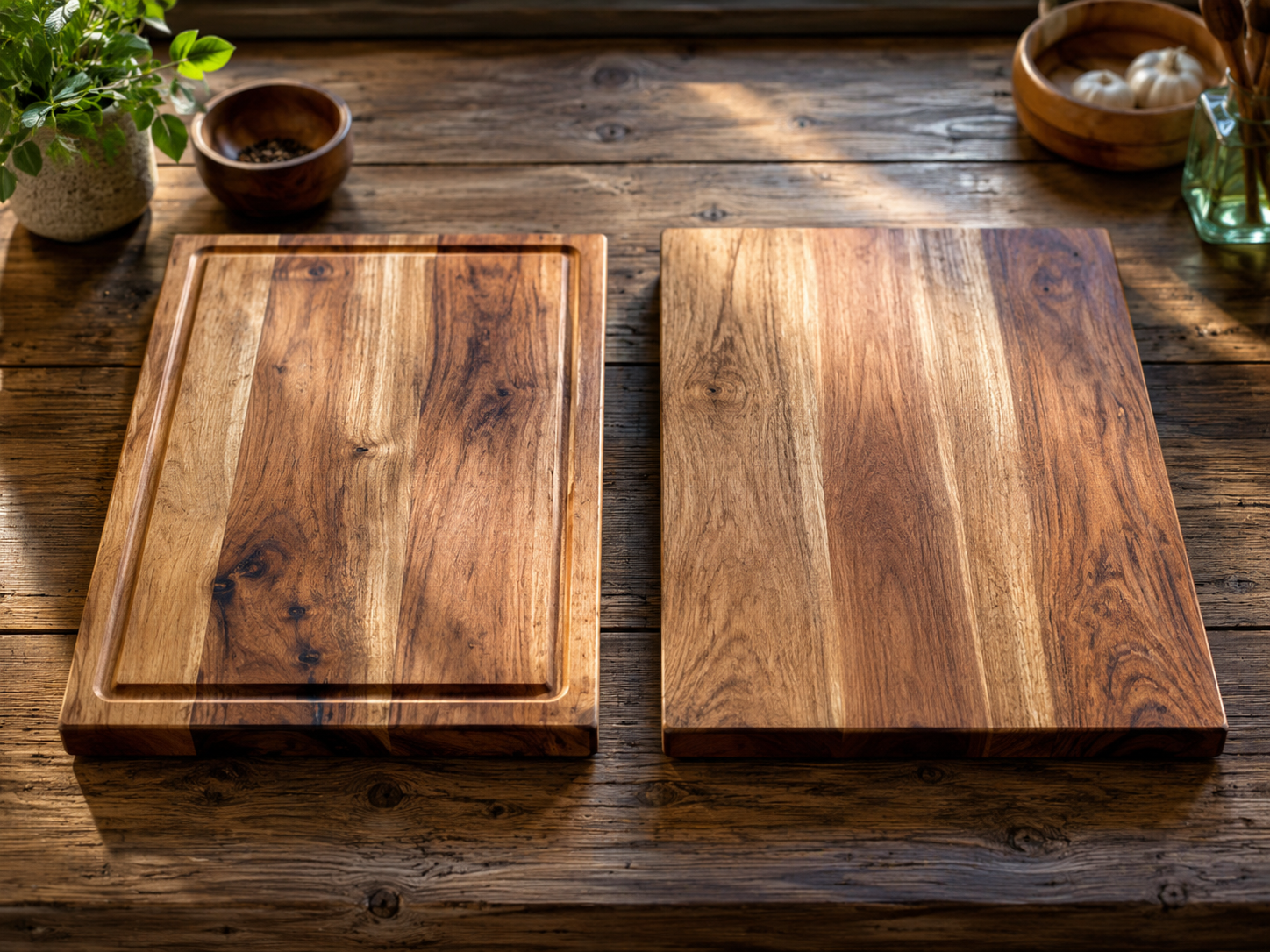
When choosing a wooden chopping board, one small detail can make a big difference: should it have a juice groove or not? A juice groove is the shallow channel cut around the edge of a board. It is designed to catch liquid before it runs onto the worktop.
Both styles are useful, but they suit different kitchens and different types of use. The right choice depends on whether you want the board mainly for carving, chopping, serving or everyday food preparation.
What is a juice groove?
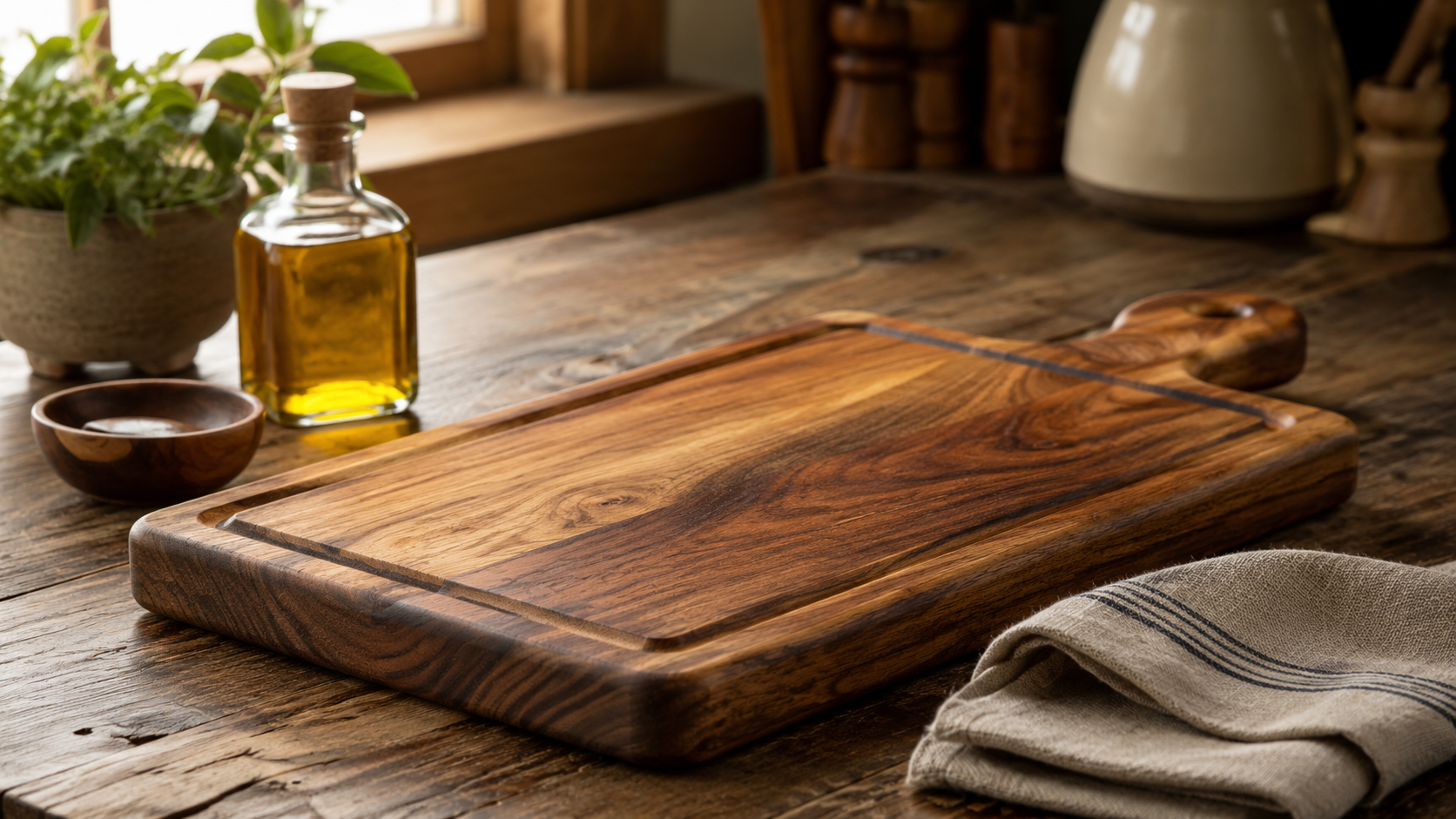
A juice groove is a routed channel around the top edge of a chopping board. It is most useful when cutting foods that release liquid, such as roast meat, tomatoes or juicy fruit. Instead of the liquid running straight off the board, the groove helps hold some of it around the edge.
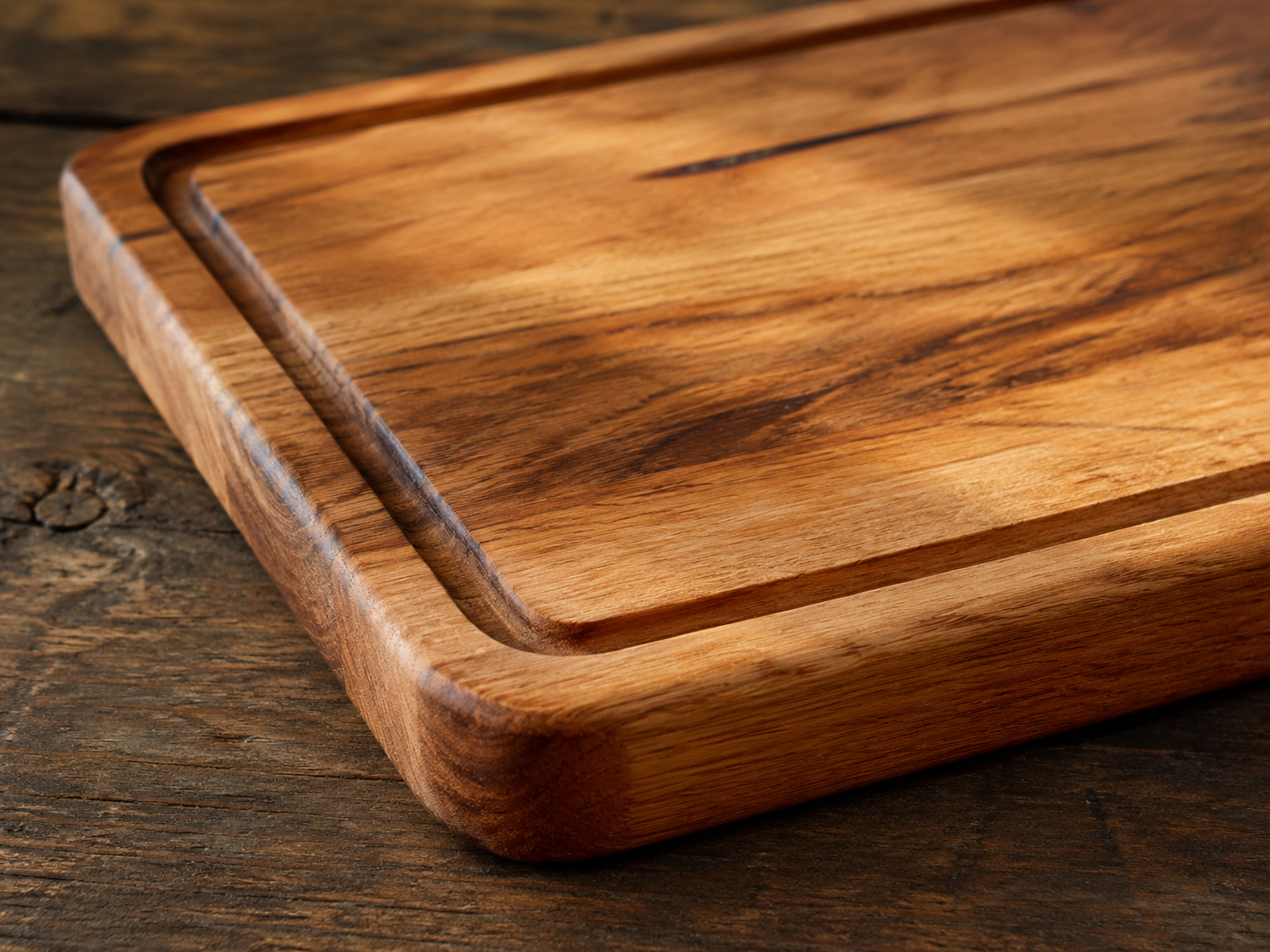 A juice groove helps catch liquid from meat, fruit and other juicy foods.
When a juice groove is useful
A juice groove is useful if you often carve meat, prepare juicy ingredients or want to reduce mess on the worktop. It can also make a board feel more like a traditional carving board.
For Sunday roasts, steak, cooked meats or very juicy fruit, a groove can be practical. It gives liquid somewhere to go and can make clean-up easier.
Drawbacks of a juice groove
A juice groove is not always needed. It reduces the completely flat working area of the board and can collect crumbs or small pieces of food. It also takes more work to make, which can add to the cost of a handmade board.
If you mainly use the board for bread, cheese, vegetables or serving, a groove may not add much value. In some cases, a clean flat board looks better and is easier to wipe down.
Why choose a board without a juice groove?
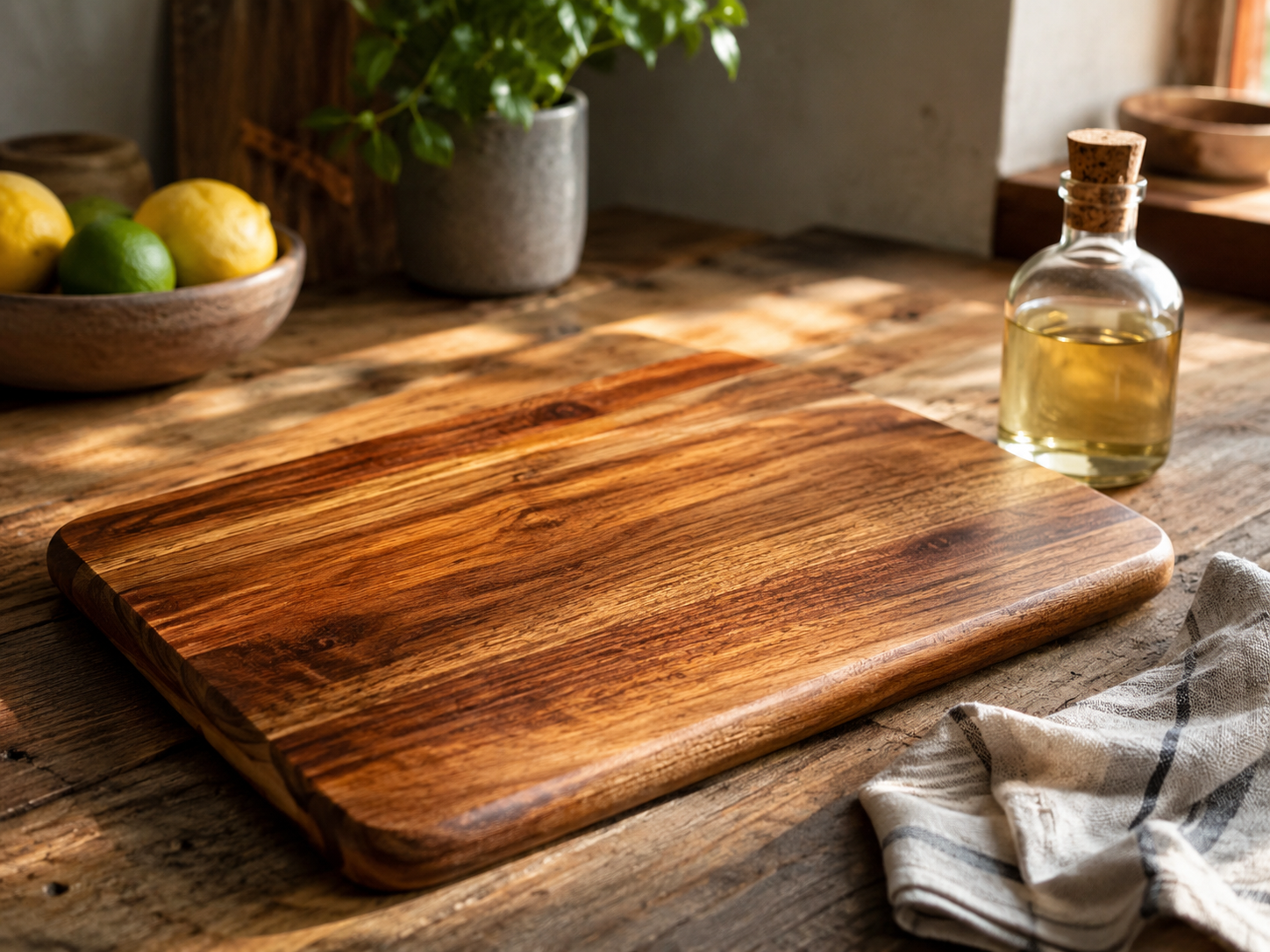
A board without a juice groove gives you a larger flat surface. This can be better for general chopping, kneading, serving and presentation. It also gives the board a cleaner and simpler look.
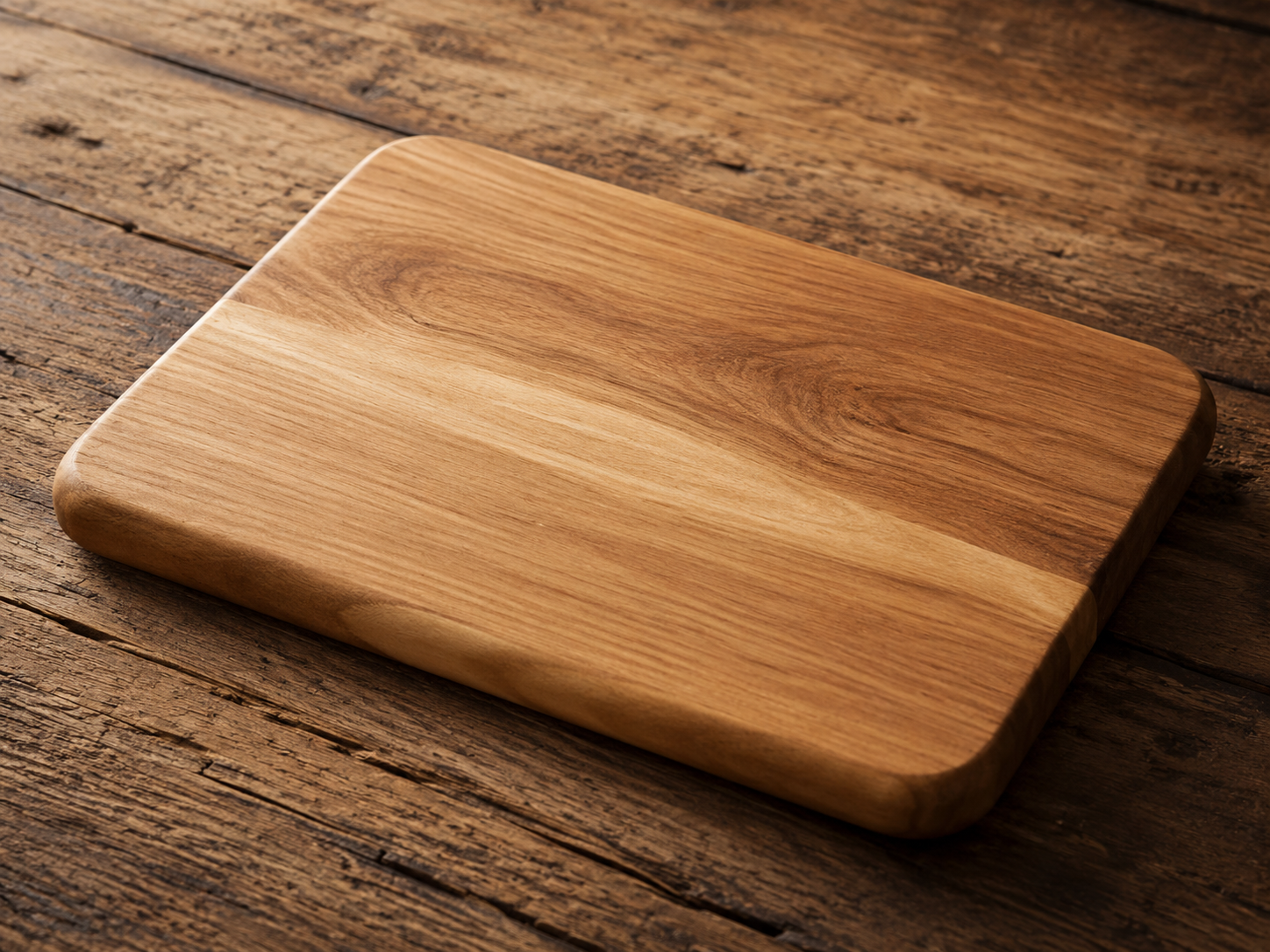 A board without a juice groove gives a clean, flat surface for chopping and serving.
Flat boards often work well as serving boards because there is no channel interrupting the surface. They can look more modern and minimal, especially when the grain of the timber is the main feature.
Which style is best for carving?
If the board will be used mainly for carving meat, choose a juice groove. It is the more practical option and helps contain liquid during carving.
Which style is best for everyday use?
For everyday chopping and general kitchen use, either style can work. If you like a cleaner look and want the most usable surface area, choose no juice groove. If you want extra practicality for wet ingredients, choose a groove.
Which style is best for a gift?
For a gift, think about the person receiving it. Someone who cooks roasts or enjoys hosting may appreciate a juice groove. Someone who likes serving boards, cheese boards or simple kitchen style may prefer a flat board without one.
Final thoughts
There is no wrong choice. A juice groove is useful for carving and juicy foods. No juice groove gives a cleaner look and a larger flat working area.
If the board is for heavy kitchen prep and carving, choose a juice groove. If the board is for general chopping, serving and display, a flat board may be the better style.