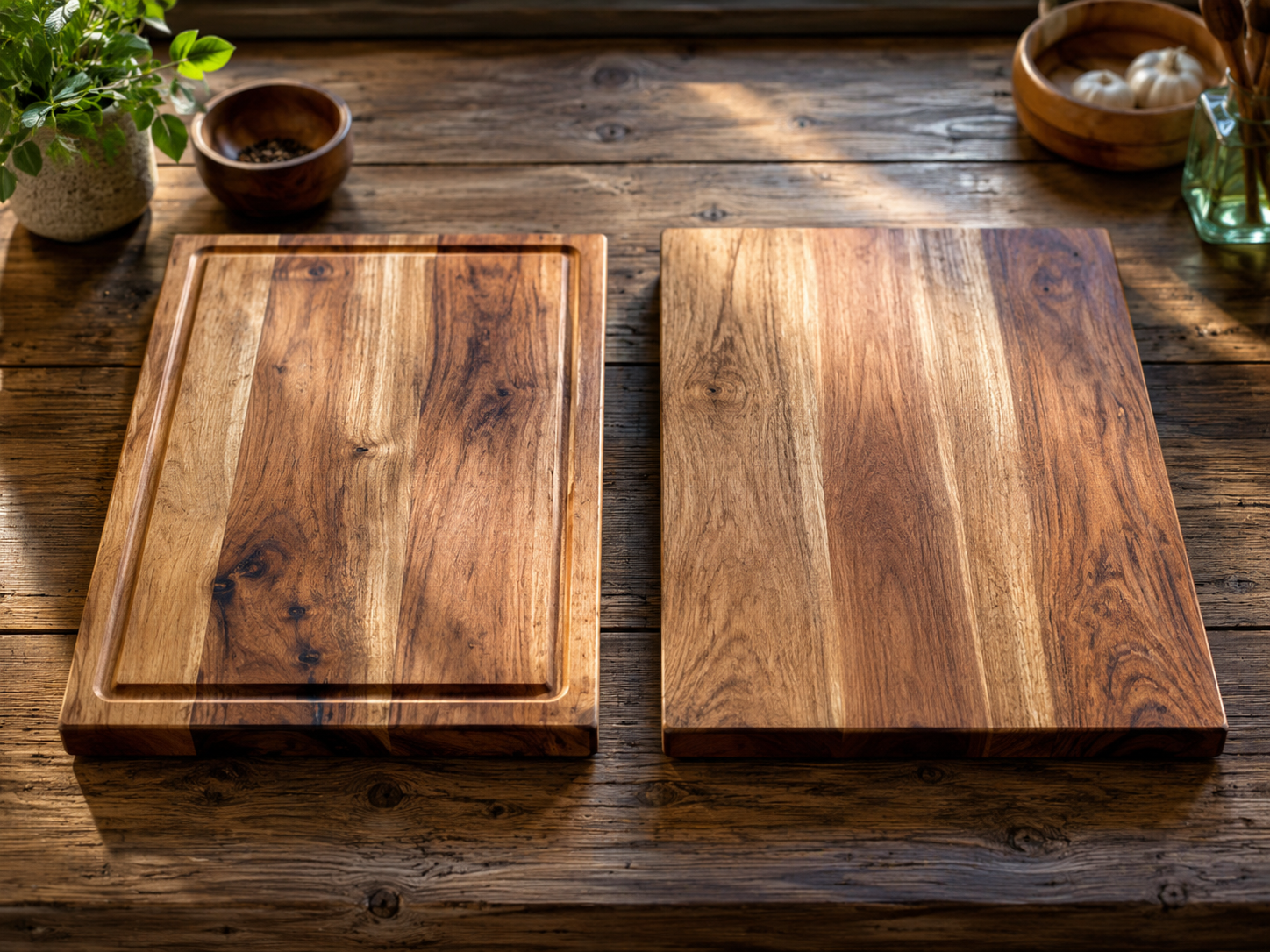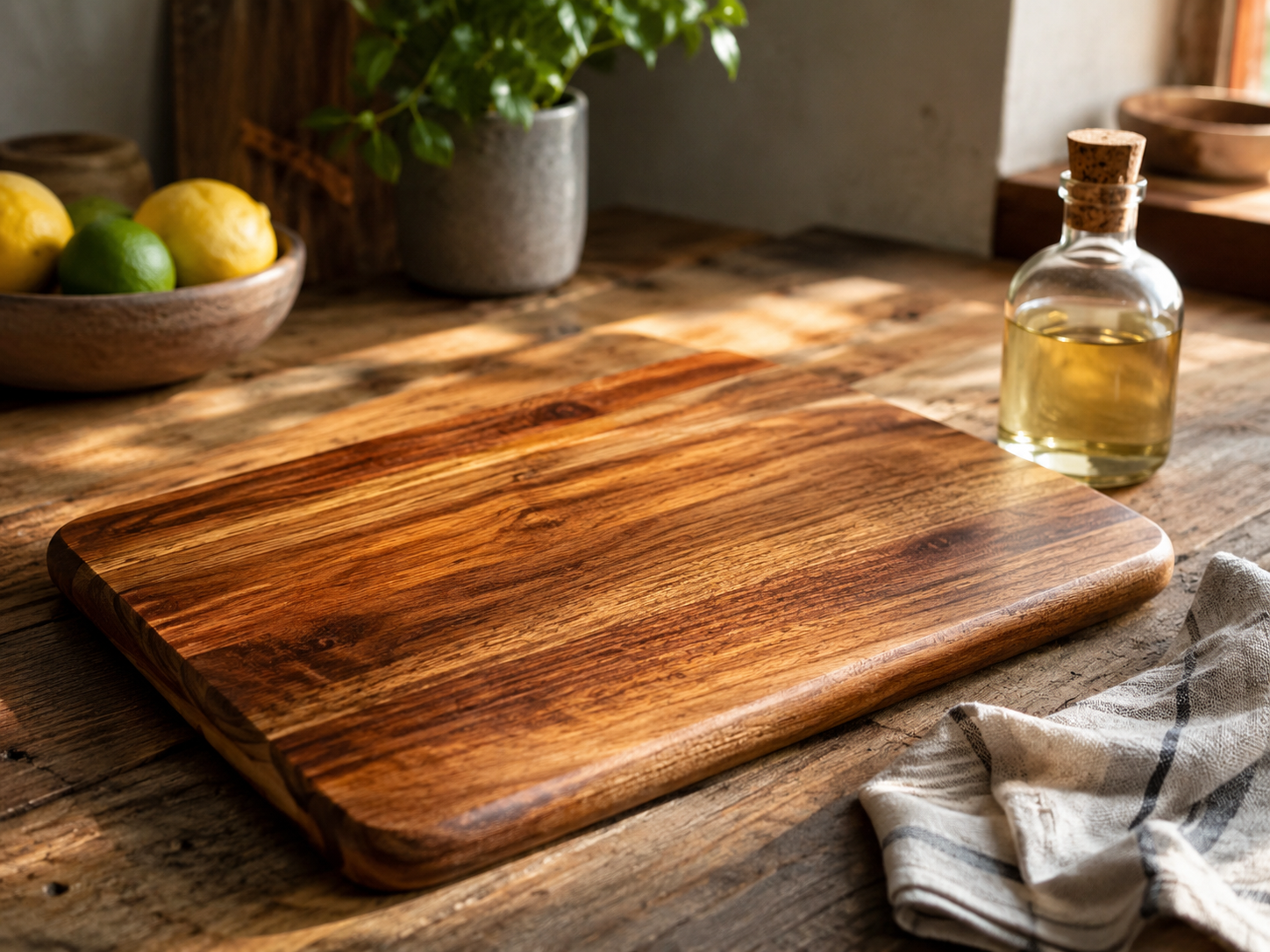
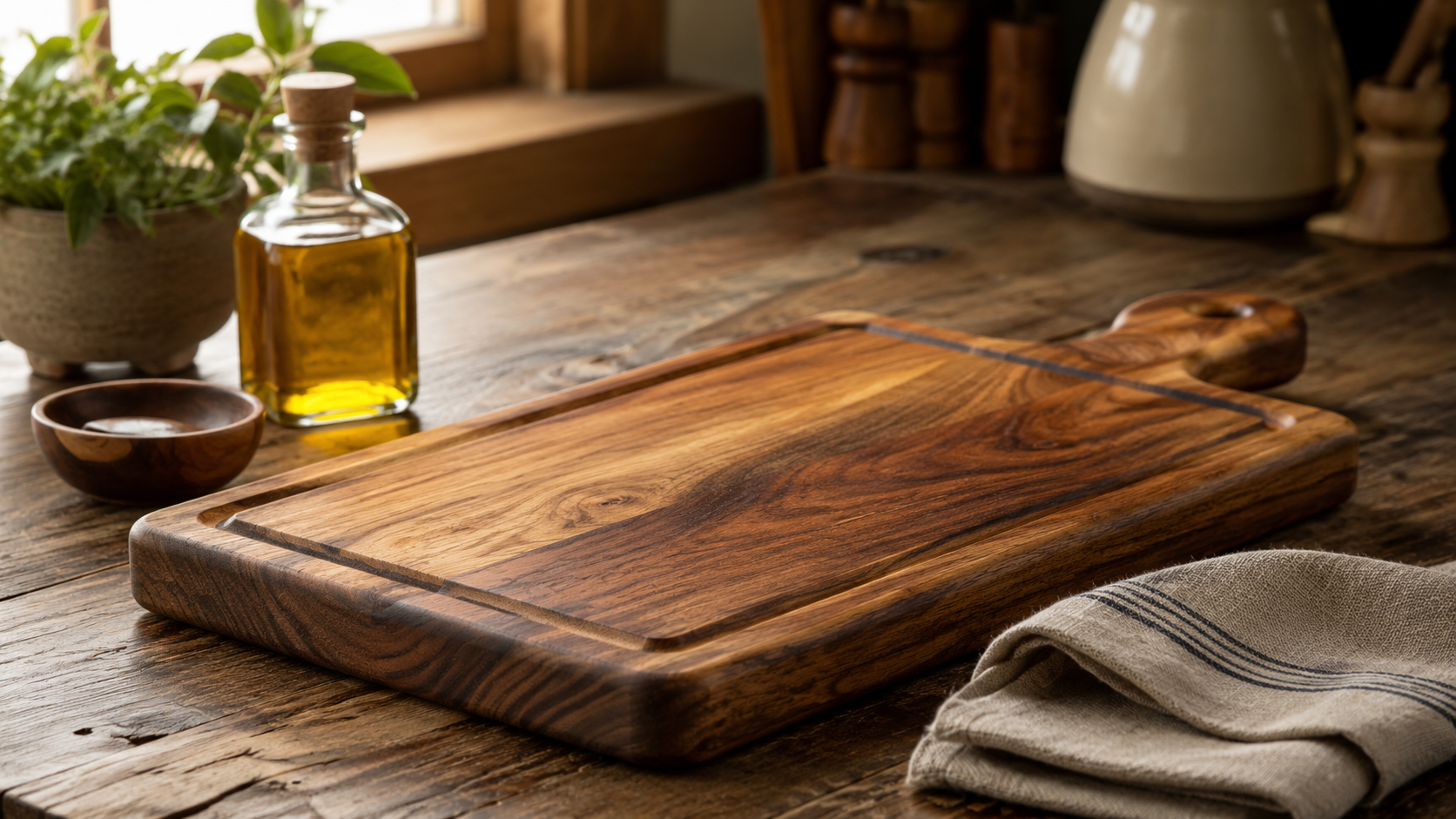
A wooden chopping board can last for years, but only if it is looked after properly. The good news is that wooden board care is simple. You do not need complicated products or a long routine. You just need to clean it gently, dry it properly and oil it when the timber starts to look dry.
Good care helps stop the wood from drying out, cracking, warping or becoming rough. It also keeps the board looking rich and beautiful rather than pale and tired.
Clean it with a damp cloth
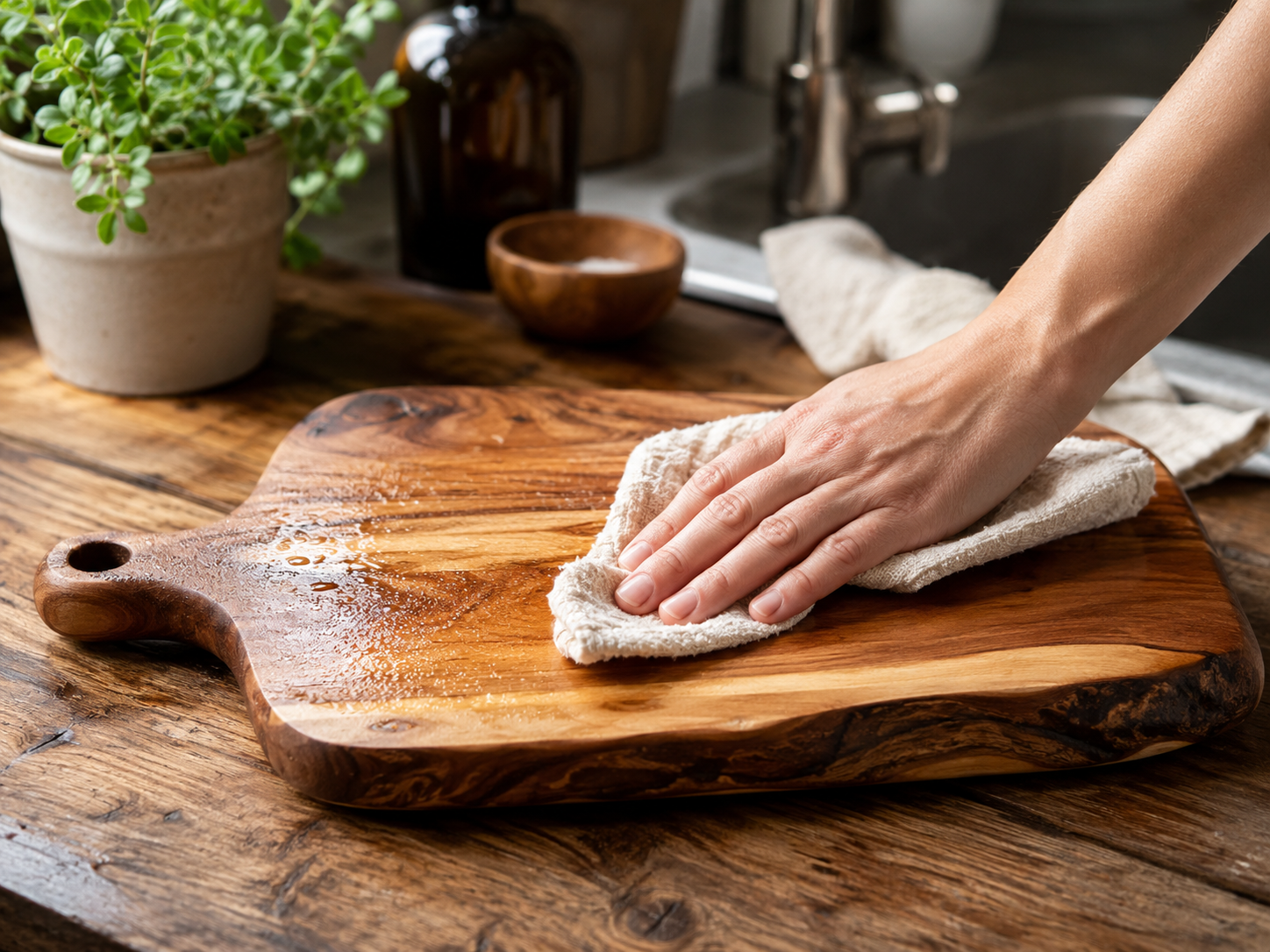
After use, wipe your wooden chopping board clean with a damp cloth. For everyday crumbs, bread, fruit and vegetables, this is usually enough. If the board needs a deeper clean, use a small amount of mild washing-up liquid, then wipe away any residue and dry the board straight away.
Do not leave a wooden board sitting wet on the side. Water is one of the main things that damages chopping boards over time. The quicker the board is cleaned and dried, the better.
Never put it in the dishwasher
A wooden chopping board should never go in the dishwasher. Dishwashers use heat, water and detergent for a long period of time, which can cause the wood to swell, dry unevenly, split or warp.
Even a well-made board can be damaged by dishwasher use. Hand cleaning is always the safer choice.
Do not soak the board
Soaking is another common mistake. A wooden board should not be left in the sink or submerged in water. Wood naturally absorbs moisture, and too much water can cause movement in the timber.
If one side of the board absorbs more water than the other, it can also encourage the board to cup or twist. Clean it, rinse only if needed, then dry it properly.
Dry it on its side
After cleaning, dry the board with a towel and then let it air dry. If possible, stand it on its side rather than leaving it flat on a wet surface. This helps air reach both sides and allows the board to dry more evenly.
Drying evenly is especially important for thicker handmade boards. It helps keep the timber stable and reduces the chance of movement.
Oil the board regularly
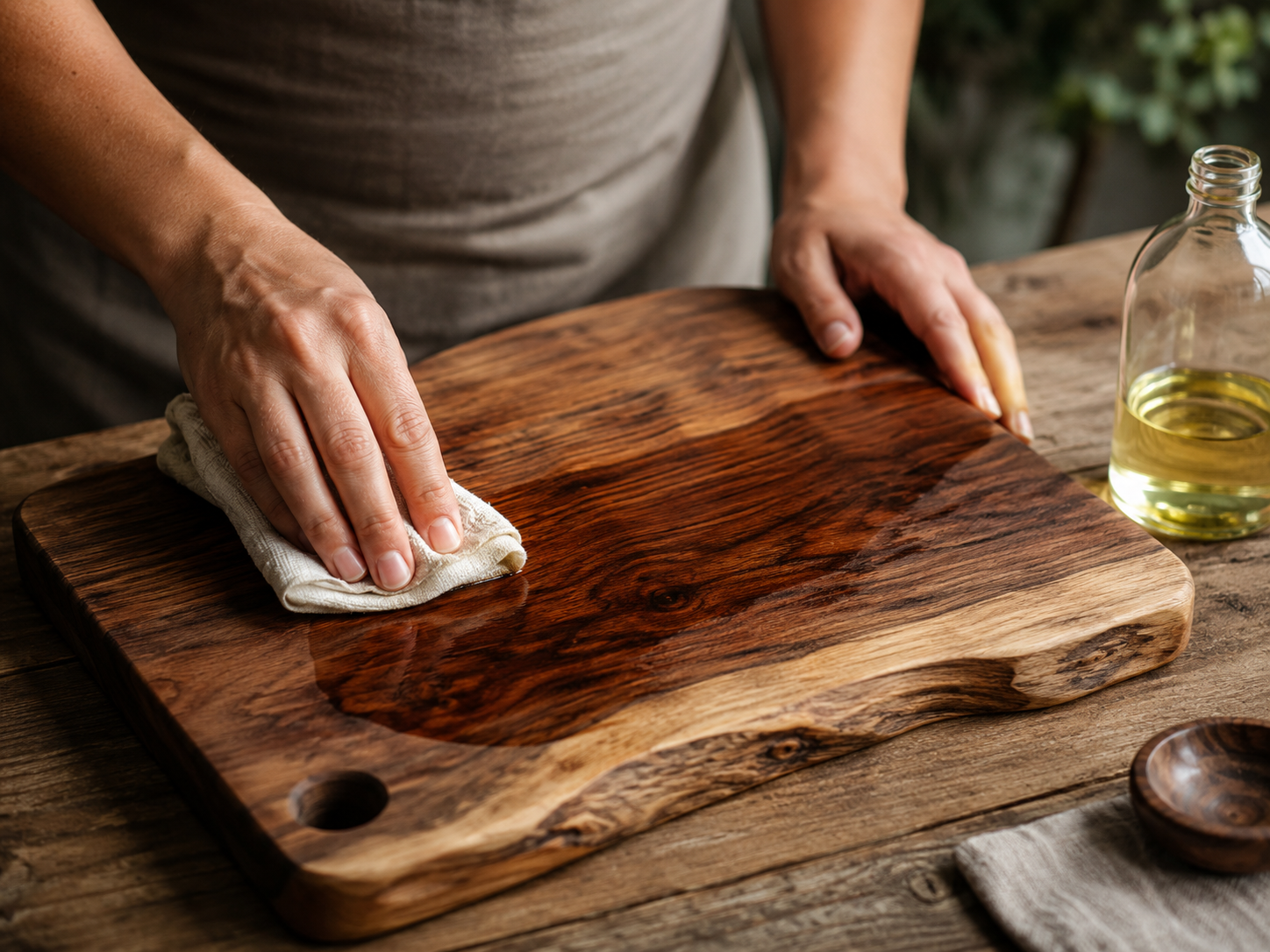
Wooden chopping boards need oiling because timber can dry out over time. When the surface starts looking pale, dry or patchy, it is time to add more oil.
Use food-safe mineral oil or a proper board wax. Apply a light coat, let it soak in, then wipe away any excess. The aim is to feed the timber, not leave a sticky layer on the surface.
Do not use cooking oils
Do not use olive oil, vegetable oil or other cooking oils on a wooden chopping board. These oils can go rancid over time and leave unpleasant smells or a sticky feel. Food-safe mineral oil or board wax is the safer option.
Look out for signs the board needs care
If your board looks dull, feels rough, absorbs water quickly or has pale dry patches, it is ready for oil. These are normal signs of use, not a problem. A quick care routine can usually bring the board back to life.
Final thoughts
Caring for a wooden chopping board is simple: wipe it clean, dry it properly, avoid soaking, never use the dishwasher and re-oil it regularly with food-safe mineral oil or board wax.
Do those basics well, and a good wooden chopping board can stay useful and beautiful for years.