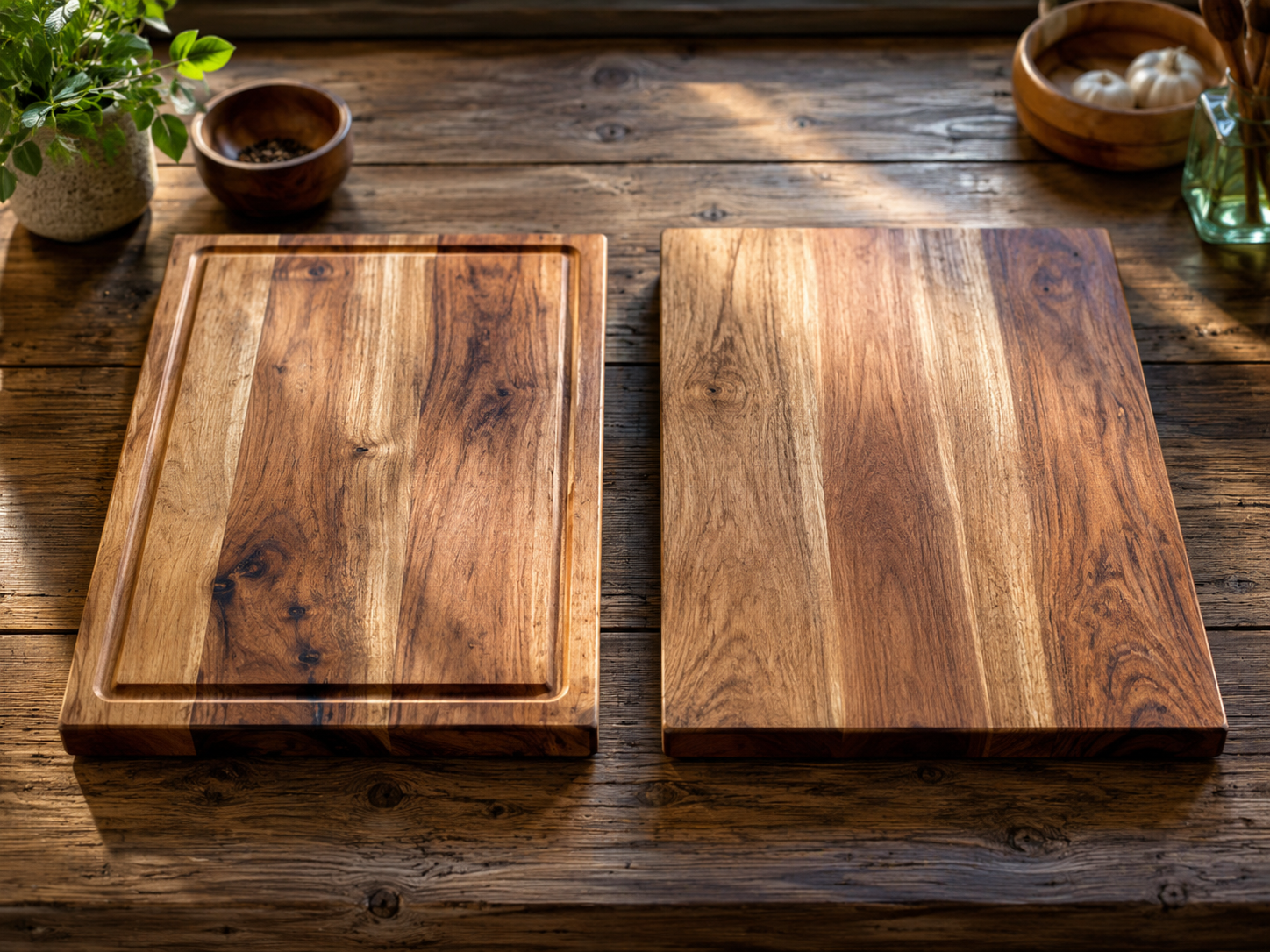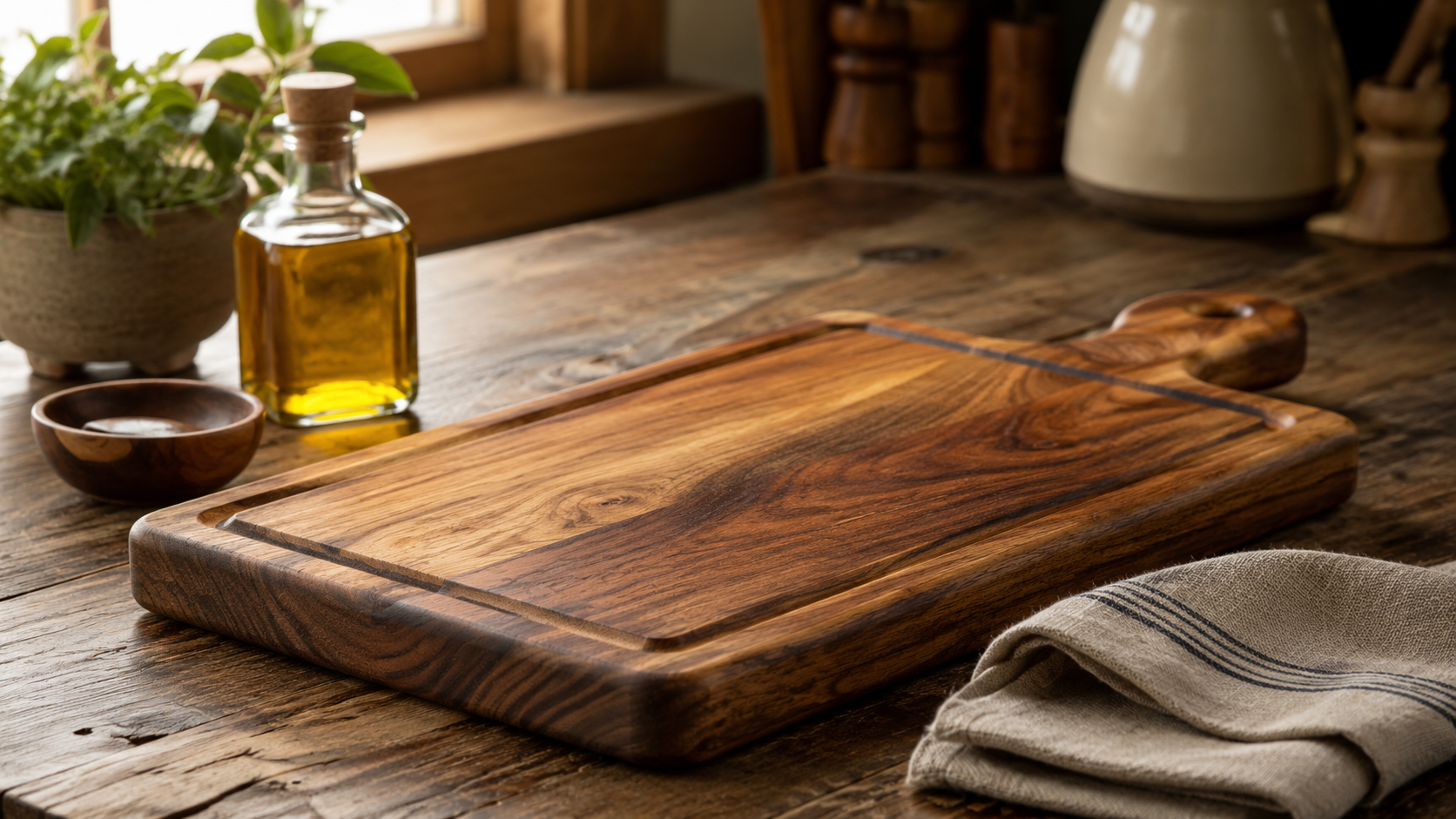
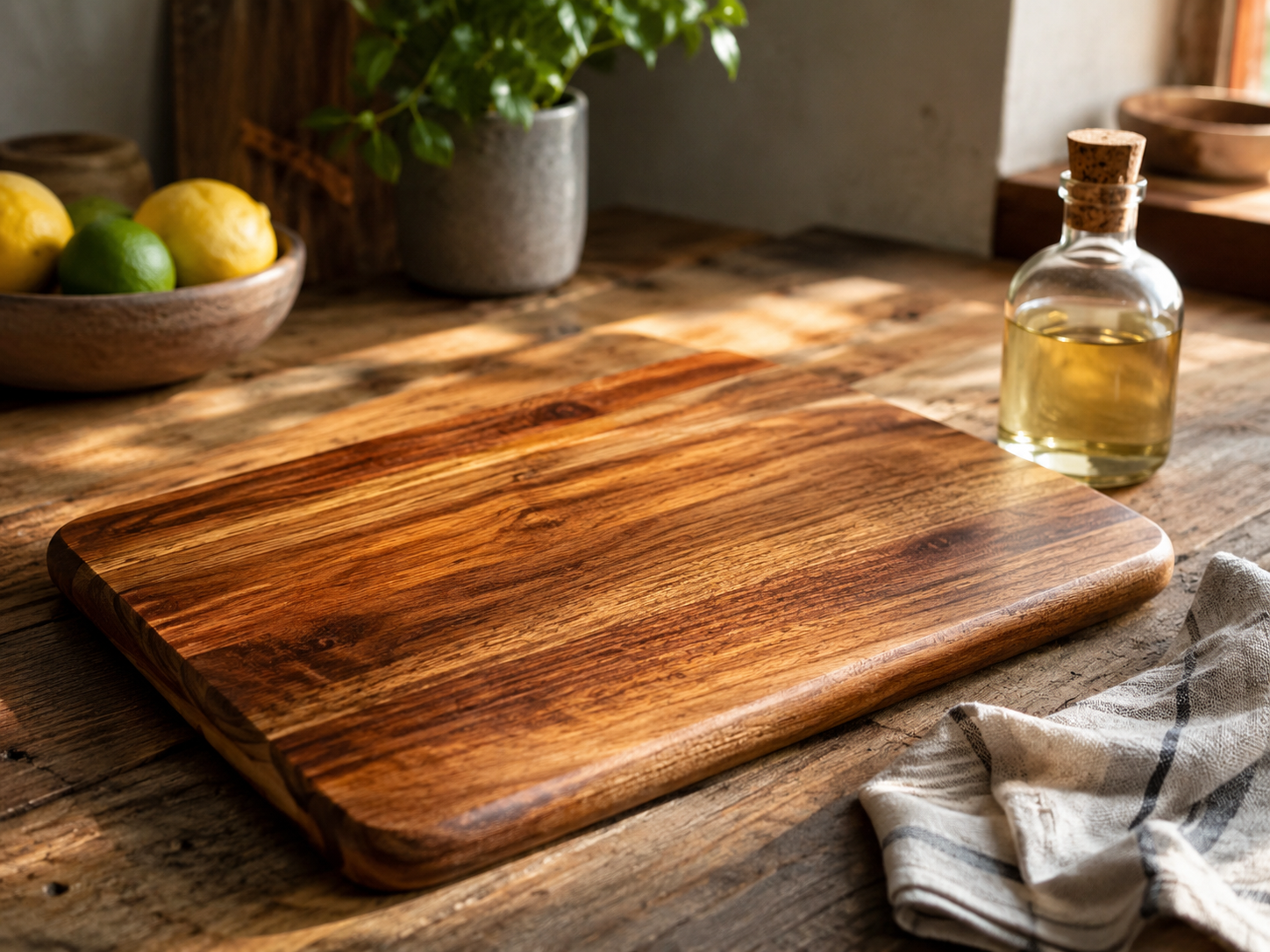
Oiling is one of the simplest ways to keep a wooden chopping board looking good and lasting longer. It helps stop the timber from drying out, makes the grain look richer and gives the surface a more cared-for feel.
But how often should you oil a wooden chopping board? The answer depends on how often you use it, how dry your kitchen is and how the board looks and feels.
A simple rule to follow
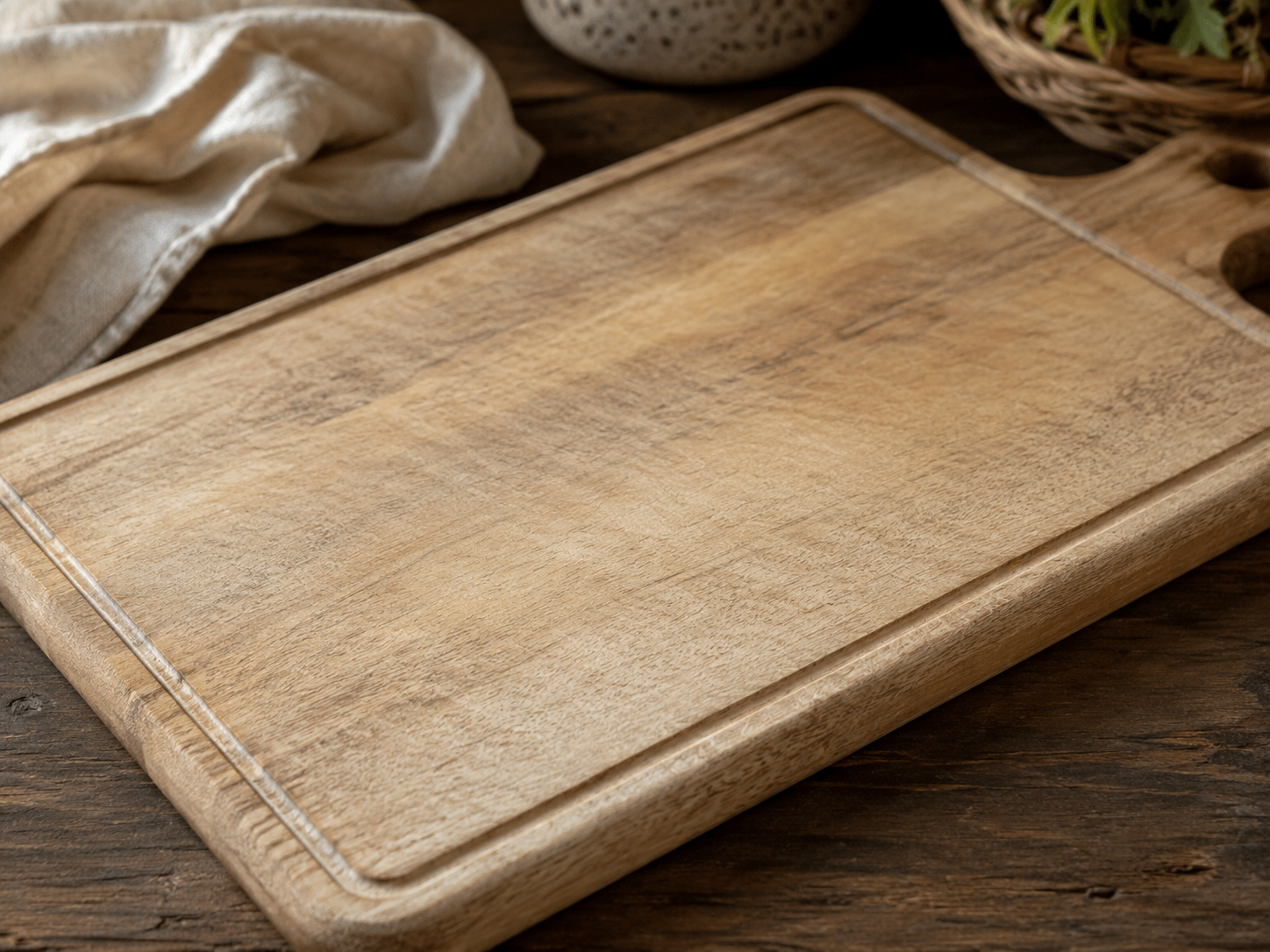
As a simple guide, oil a wooden chopping board when it starts to look dry, pale or patchy. For a board used regularly, this may be every few weeks at first, then monthly once it is well maintained. A board used occasionally may only need oiling now and again.
The board will usually tell you when it needs care. If the surface looks dull, feels rough or absorbs water quickly, it is ready for oil.
Why new boards may need oil more often
A new wooden chopping board may benefit from a little extra care at the start of its life. Fresh timber can absorb oil as it settles into use. After the first few uses and cleans, you may notice the surface becoming slightly lighter or drier.
This is normal. A few light oilings early on can help build up the board’s condition and keep the surface looking rich.
What oil should you use?
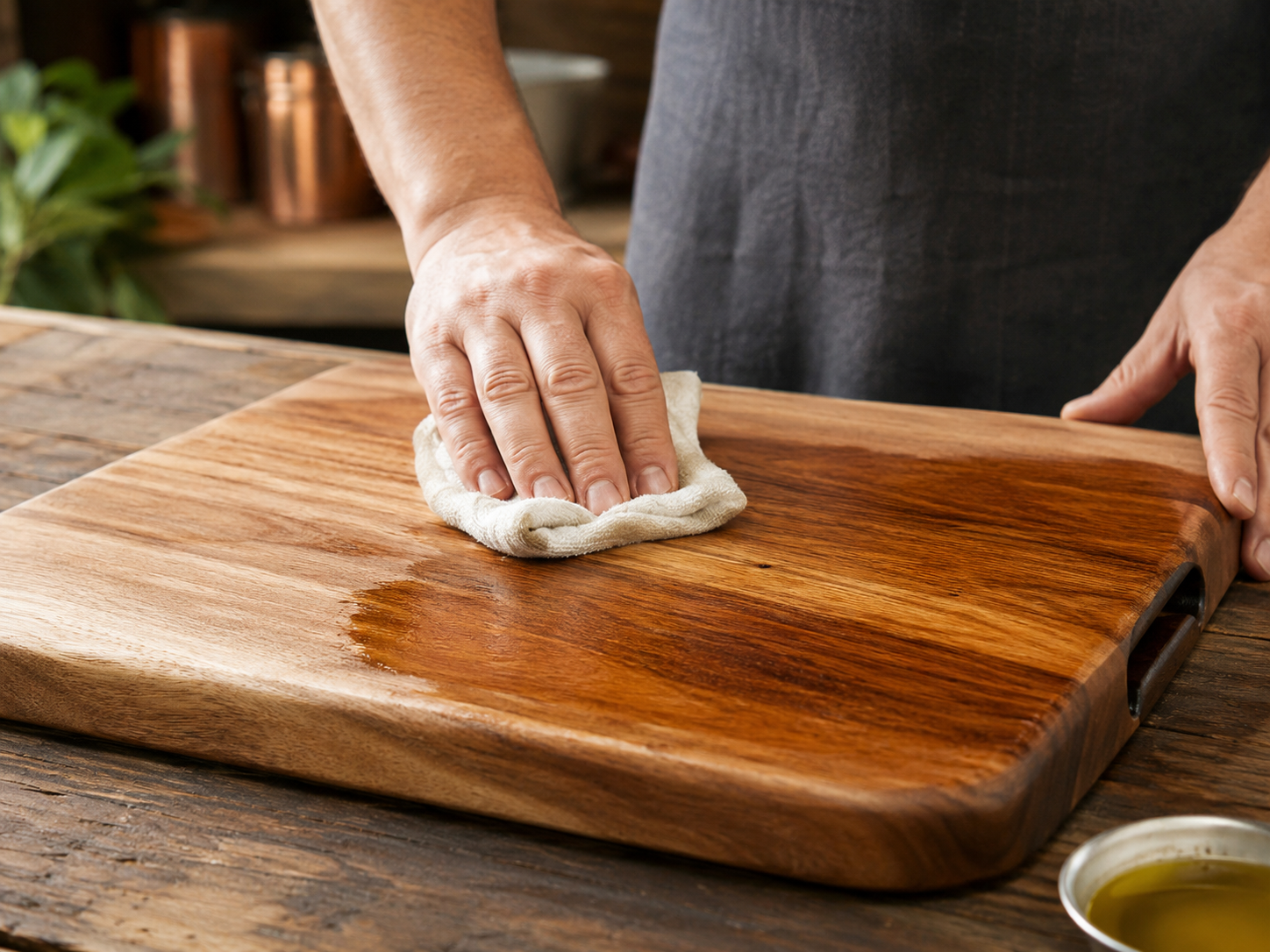
Use food-safe mineral oil or a proper board wax. These are designed for wooden boards and food-contact surfaces. Apply a small amount, spread it evenly, allow it to soak in, then wipe away any excess.
Do not use cooking oils
Do not use olive oil, vegetable oil or other cooking oils. These can go rancid over time, which may leave the board smelling unpleasant or feeling sticky. A proper food-safe mineral oil or board wax is the safer choice.
How to oil a wooden chopping board
Start with a clean, dry board. Add a small amount of oil to the surface and spread it with a clean cloth. Cover the whole board, including the edges. Let the oil soak in, then wipe away anything left on the surface.
More oil is not always better. A light, even coat is usually enough. If the board still looks dry after the oil has soaked in, you can apply another light coat.
Can you oil a board too much?
You can overdo it if you leave thick oil sitting on the surface. This can make the board feel greasy or sticky. The aim is to feed the wood, not cover it in a heavy layer.
Always wipe off excess oil and allow the board to dry before putting it away or using it again.
Final thoughts
Oil your wooden chopping board whenever it starts to look dry, pale or tired. For regular use, monthly care is a good habit, with extra oiling early on if the board is new or used heavily.
Use food-safe mineral oil or board wax, avoid cooking oils and always wipe away excess. This small routine can help your board stay beautiful for years.